
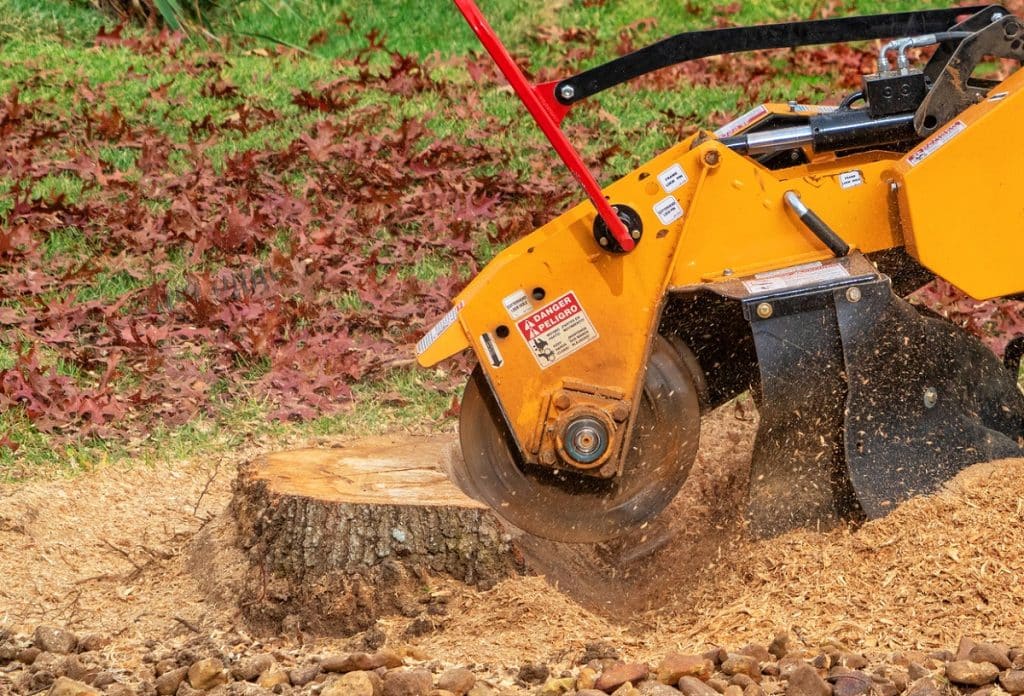
Stump grinding breaks tree stumps down into small wood chips. It creates safe, traversable surfaces, deters additional root growth, and restores usable space. Grinding decaying stumps is also an effective pest prevention. Whether you’re worried about termites, premises liability claims, or sewer line damage, it’s a great intervention. But before starting, check out these common stump grinding myths and their potential dangers.
Anyone Can Do It
In most places, you don’t need a permit or license for standard stump grinding, and you can rent a stump grinder from many major hardware stores or heavy-equipment suppliers. But although using this machinery seems simple enough, there’s a lot that goes into safe and effective stump grinding. There are also many serious hazards in performing these operations incorrectly:
- Injuries from high-speed debris
- Injuries from machine kickback
- Damage to underground utilities
- Damage to underground irrigation systems
Consumer-Grade Grinders Are Just as Good
Although you can rent a stump grinder and do the job on your own, don’t expect rental equipment to perform as well as commercial-grade grinders. Consumer-grade grinders often grind stumps down just a few inches below the soil. Commercial grinders can grind stumps down 10 or more inches deeper. Shallow grinding is less effective for stopping invasive root growth and preventing resprouting.
Grinding Alone Protects Sewer Lines
For some trees and their stumps, stump grinding is instantly effective for stopping root growth and preventing resprouting. But some tree species are far more resilient. Unlike conifers, nut trees, and fruit trees, trees such as willows, poplars, and elms have a high regrowth potential. Many fast-growing hardwoods quickly coppice, or resprout from their stumps. These include sycamore, sweetgum, and black locust trees.
If you’re grinding the stump of an especially hearty tree species to protect underground infrastructure, you may need to pair stump grinding with another intervention. For instance, a tree care specialist might recommend pairing stump grinding with underground root barriers or a partial, shallow excavation.
Stump Grinding Completely Disrupts Landscapes
Grinding a stump is far less invasive than uprooting a stump entirely. Uprooting a stump disrupts soil across a much wider area and has a far greater risk of causing soil erosion. When you grind a stump, you can also use the resulting mulch to fill in any voids.
It’s Always the Best Choice
In many cases, stump grinding is the most effective way to stop tree root intrusion in sewer lines, eliminate trip-and-fall hazards, and reclaim usable landscape. But there are instances in which stump grinding is a less-than-ideal choice for problem-solving. For instance, if a stump is surrounded by underground utilities or other obstructions, shallow excavation is a better option.
Stump grinding is an effective solution to many tree stump and tree root problems, but only if done correctly. The best way to avoid the hazards of common stump grinding misconceptions is by hiring tree care specialists. If you live in Wixom, MI or a surrounding area and need stump grinding services, make your first call to Ruben’s Tree Service.